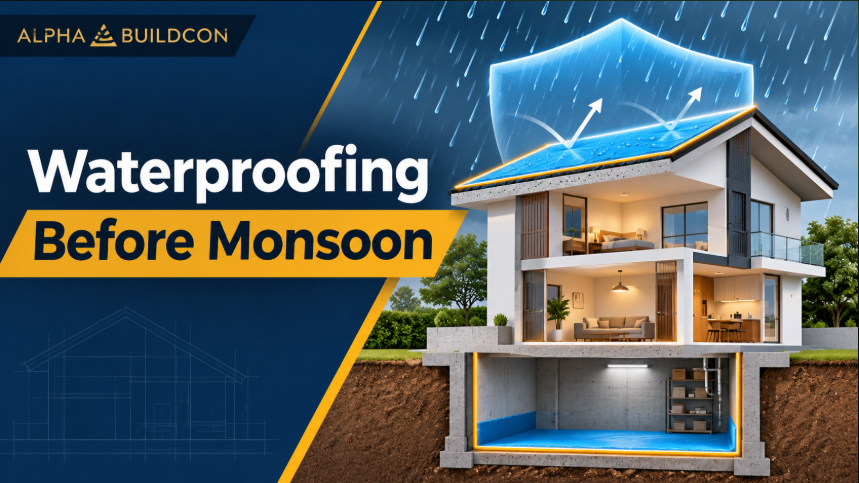
Planning house waterproofing during construction is one of the most important steps in protecting a new home from moisture damage, roof leakage and basement seepage. Many homeowners focus on flooring, paint and interiors but overlook waterproofing until damp patches or water stains appear. By then, repairs can involve breaking finished surfaces and spending additional money. For homeowners in Indore, where monsoon rainfall can expose weaknesses in roofs, terraces, foundations and drainage systems, waterproofing should be planned during construction rather than treated as a last-minute activity. A properly designed waterproofing system helps protect the structure and reduces recurring leakage problems.
Why Is Waterproofing Important During House Construction?
Waterproofing prevents unwanted water penetration through suitable materials, surface treatments and construction detailing.
Water can enter through roof slabs, terrace joints, basement walls, bathrooms, balconies and foundations. Even small gaps or poorly treated junctions can allow moisture to travel through concrete and masonry.
Over time, persistent moisture can cause:
- Damp patches on walls and ceilings
- Peeling paint and damaged plaster
- Fungal growth and unpleasant odours
- Corrosion of embedded reinforcement
- Damage to furniture and interior finishes
- Deterioration of concrete and masonry
Waterproofing is particularly important during construction because vulnerable surfaces are still accessible. Protective treatments can be installed before tiles, flooring and other finishes conceal them. This is why waterproofing details should be part of building design and construction from the start, not an afterthought.
1. Roof and Terrace Waterproofing Before Monsoon
The roof and terrace receive direct exposure to rainfall and changing temperatures. They are among the most important areas to protect during construction.
Create Proper Roof Slope for Water Drainage
One common reason for terrace leakage is stagnant rainwater.
A roof should have an appropriate slope towards designated rainwater outlets so water does not accumulate in low areas. The slope should be established during construction rather than relying only on waterproofing chemicals.
Apply a Suitable Waterproofing System
After proper surface preparation, an appropriate waterproofing system can be applied. Depending on the project, options may include cementitious coatings, liquid-applied membranes and polymer-modified systems.
The selection should consider surface condition, exposure, drainage and the final terrace finish.
Protect Parapet Junctions and Roof Joints
The junction between the roof slab and parapet wall is a common leakage point. These corners require proper detailing and treatment. Pipe penetrations and construction joints also need attention.
The roof should be inspected and tested before the final protective finish is installed.
2. Basement Waterproofing During Construction
Basement leakage can be difficult to repair because water may enter through underground walls, floor slabs and construction joints.
Waterproof the Basement Walls and Floor
Basement waterproofing should be planned before excavation and foundation work progresses too far.
Depending on soil conditions and groundwater exposure, the system may involve external waterproofing membranes, cementitious treatments, protective boards and suitable drainage arrangements.
Treat Construction Joints Carefully
Joints between concrete pours can become potential water entry points. Where specified by the structural design, suitable waterstops or joint treatment systems should be installed during concrete construction.
Plan External Drainage
Water should not collect against basement walls. Appropriate drainage arrangements help manage groundwater and reduce pressure against the basement structure.
For basements with significant groundwater exposure, consult qualified structural and waterproofing professionals before selecting a treatment system.
3. Foundation and Plinth Waterproofing
Waterproofing should begin well before the roof construction stage.
Foundations and plinth areas are exposed to ground moisture. If these areas are not properly protected, dampness can travel upwards through walls and affect interior finishes.
Important precautions include:
- Providing an appropriate damp-proof course.
- Treating foundation and plinth surfaces as specified.
- Using compatible waterproofing compounds where required.
- Ensuring proper backfilling and soil compaction.
- Providing suitable surface drainage around the building.
The damp-proof course should be continuous and properly connected with the relevant construction details.
4. Bathroom and Balcony Waterproofing
Bathrooms, utility areas and balconies experience regular exposure to water. Leakage from these spaces can affect ceilings and walls below.
Waterproof Bathroom Floors and Walls
Bathroom waterproofing should be completed before tile installation.
The surface should be properly prepared. Special attention should be given to floor corners, pipe outlets, floor traps and wall junctions.
After application and curing, the treated area should undergo an appropriate water-retention or ponding test before protective screed and tiles are installed.
Check Balcony Drainage and Thresholds
Balconies should have adequate slopes towards drainage outlets. Door thresholds and wall junctions need suitable detailing to prevent rainwater from entering adjoining rooms.
Water should flow away from the building rather than collecting near doors or external walls.
5. External Wall Waterproofing and Damp Protection
External walls are exposed to rainfall, sunlight and temperature changes.
Cracks, poorly finished plaster and unsealed window joints can allow water to penetrate the building.
During construction, ensure that external plaster is applied properly and visible cracks or gaps are treated using suitable materials.
Window frames, sill junctions, chajjas and service penetrations should receive appropriate sealing. External window sills should direct rainwater away from the wall.
Waterproofing paint alone cannot correct poor construction detailing or major cracks. For older buildings where leakage has already started, renovation and retrofitting services can assess the cause before repairs begin.
6. Choosing the Right Waterproofing Materials
Selecting the correct material is as important as applying it properly. Different building areas require different waterproofing systems.
| Waterproofing Material | Common Application |
| Cementitious coating | Bathrooms and wet areas |
| Liquid-applied membrane | Roofs, terraces and balconies |
| Bituminous membrane | Selected roofs and below-ground applications |
| Integral waterproofing compound | Cement mortar and concrete mixes |
| Polyurethane coating | Selected exposed surfaces |
| Protective drainage membrane | Certain basement applications |
The product should be selected according to its intended application and compatibility with the surface.
For example, BIS recognises IS 2645:2003 as the specification for integral waterproofing compounds used in cement mortar and concrete.
Homeowners should request product technical data sheets and application instructions rather than selecting materials based only on brand advertisements.
7. Why Professional Civil Construction Services Matter
Waterproofing is not an isolated activity. It is connected to concrete quality, drainage design, surface preparation, structural joints and finishing work.
Professional civil construction services help coordinate these activities so waterproofing is included at the correct construction stage.
For example, roof waterproofing cannot perform effectively if the slab has poor drainage slopes or badly treated joints. Similarly, basement membranes can become ineffective if they are damaged during backfilling.
Construction planning should therefore include waterproofing specifications, application methods, inspection points and testing requirements. Dedicated project planning & management services can help schedule these activities so that waterproofing is completed and tested before finishes are installed.
8. How to Choose a House Construction Company in Indore
Selecting the right house construction company in Indore is important when planning a new home with long-term moisture protection.
Before finalising a construction partner, evaluate:
Previous project experience: Review completed residential projects and understand the company’s waterproofing approach.
Material specifications: Ask which products are proposed for roofs, bathrooms, foundations and basements.
Technical supervision: Check whether qualified professionals supervise application and inspect critical details.
Testing procedures: Confirm whether roof and bathroom waterproofing tests are included.
Written scope: Ensure that waterproofing areas, materials and application methods are documented.
Experienced civil contractors in Indore should understand the importance of coordinating waterproofing with masonry, concrete, plumbing and finishing activities.
At Alpha Buildcon, integrating waterproofing considerations into construction planning can help homeowners address vulnerable areas before they become hidden behind completed finishes.
9. Common Waterproofing Mistakes to Avoid Before Monsoon
Even good-quality waterproofing materials can fail when applied incorrectly.
Ignoring surface preparation: Dust and loose particles can affect adhesion.
Skipping drainage planning: Waterproofing cannot compensate for a roof that allows water to stagnate.
Leaving joints untreated: Parapet corners, pipe penetrations and construction joints require proper detailing.
Applying coatings without testing: Waterproofing should be inspected before tiles or protective finishes conceal it.
Choosing products only by price: Material suitability and application requirements matter more than the lowest quotation.
Damaging membranes during subsequent work: Waterproofed surfaces need protection during backfilling and finishing.
Treating waterproofing as a last-minute activity: Protection measures should be incorporated into the construction schedule from the beginning.
10. A Practical Waterproofing Checklist Before Handover
Before taking possession of your new home, check whether the essential waterproofing activities have been completed.
- Roof slope and drainage outlets have been inspected.
- Terrace and parapet junctions have been treated.
- Basement walls and floors have received the specified protection.
- Foundation and plinth damp-proofing have been completed.
- Bathroom and balcony waterproofing has been tested.
- External wall cracks and window junctions have been sealed.
- Waterproofing records and product details are available.
- Identified leakage issues have been rectified.
Photographs taken before tiles and protective layers are installed can also help maintain a useful construction record. Including waterproofing in the budget from the start also helps you estimate the overall construction cost in Indore more accurately.
Conclusion
Planning house waterproofing during construction is a practical investment in the long-term durability of your home. From roof and terrace protection to basement walls, foundations, bathrooms and external surfaces, every vulnerable area needs an appropriate waterproofing solution.
For homeowners in Indore, monsoon preparation should begin during construction rather than after the first signs of leakage appear. Proper drainage, suitable materials, careful application and timely testing can help prevent moisture-related damage and reduce future maintenance expenses.
Alpha Buildcon believes that quality construction goes beyond the visible appearance of a finished property. Thoughtful planning, attention to technical details and coordinated execution are essential for creating durable homes. By including waterproofing in the construction plan from the beginning, homeowners can protect their investment and enjoy greater confidence through every monsoon season.
